Summary
A strong marketing plan is the backbone of any successful small business. By setting clear goals, identifying your target audience, focusing on the right channels, crafting consistent messaging, and tracking your results, you can stop guessing and start growing with purpose. Even if you’re working with limited time or resources, having a structured plan helps you focus your energy where it counts and avoid wasting effort on strategies that don’t move the needle.
Remember, the goal isn’t to do everything—it’s to do the right things consistently.
For many small business owners, marketing often feels like throwing spaghetti at the wall to see what sticks. A Facebook post here, a Google ad there, and maybe a flyer at the local coffee shop.
But without a clear marketing plan, you’re likely wasting time and money without truly reaching your ideal customers.
A well-structured marketing plan doesn’t need to be complicated—it just needs to cover the essentials. Below are five key components every small business marketing plan should include.
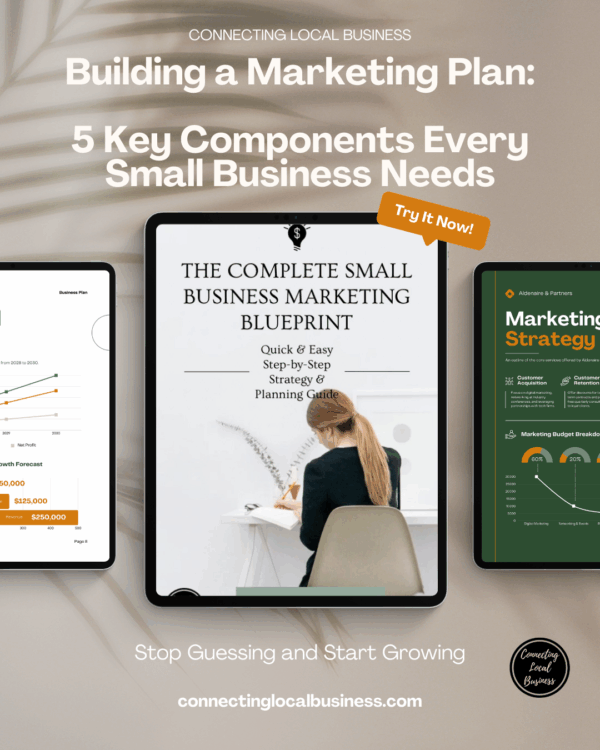
Building a Marketing Plan: 5 Key Components Every Small Business Needs
1. Define Your Business Goals
Your marketing plan should start with clarity around what you want to achieve. Goals should be specific, measurable, and time-bound. For example:
- Increase website traffic by 30% over the next 6 months.
- Generate 100 new leads per quarter.
- Grow repeat customer sales by 15% this year.
By defining your goals, you can tailor your marketing strategies to match. Without this step, it’s like driving without a destination.
2. Know Your Target Audience
Many small business owners make the mistake of marketing to “everyone.” The truth is, the more specific you are about who you serve, the easier it becomes to connect with them.
Consider these questions:
- Who are your best customers right now?
- What problems are they trying to solve?
- Where do they spend their time online (Google, Facebook, LinkedIn, Instagram)?
Creating customer personas—fictional profiles of your ideal customers—can help you shape your marketing messages with more focus and clarity.
3. Choose the Right Marketing Channels
Not all platforms are created equal, and not all will be the right fit for your business. Instead of spreading yourself thin across every channel, focus on the two or three that align with your audience and goals. Examples:
- Local businesses: Google Business Profile + local SEO + Facebook or Instagram.
- B2B services: LinkedIn, email marketing, and blog content.
- E-commerce: Paid ads, Instagram/TikTok, and email follow-up.
Tip: Your website should always be the hub of your marketing efforts, with other channels driving traffic back to it.
4. Develop Clear Messaging & Content Strategy
A strong marketing plan defines what you’re saying and how you’re saying it. Small businesses need clear, consistent messaging that reflects their value proposition—what makes you different and why customers should choose you.
Your content strategy should support that messaging. Think about:
- Blog posts that answer common customer questions.
- Social media posts that showcase your expertise.
- Case studies or testimonials that build trust.
Consistency across channels builds recognition and credibility over time.
5. Track, Measure, and Adjust
The best marketing plan is not set in stone. You’ll need to track results and adjust along the way. Tools like Google Analytics (for website traffic), Google Business Profile Insights (for local search visibility), and social media analytics provide valuable feedback.
Ask yourself:
- Which campaigns are driving the most leads or sales?
- Are your ads or posts reaching the right audience?
- What can you stop doing because it’s not working?
A quarterly review of your plan ensures you stay on track and continue to refine your strategies.
Final Thoughts
Building a marketing plan doesn’t have to feel overwhelming. Start with your goals, define your audience, focus on the right channels, craft clear messaging, and track results. When you approach marketing with a roadmap, you’ll find that your efforts pay off with more clarity, consistency, and results.
Action Step (15 minutes today): Write down your top 2–3 business goals for the next six months and identify one marketing channel you’ll focus on to reach them.
Ready to take the first step toward a clear, actionable marketing plan?
👉 Download my “Local Business Marketing Toolkit” to map out your goals, identify your best customers, and choose the right marketing channels for success.
Or, if you want a personalized approach:
📅 Book a free 15-minute consultation with me today, and let’s discuss how to create a marketing plan tailored to your business.