Summary
A lot of the tips or advice we see online may be directed to an online-only business and not necessarily a local business with a brick-and-mortar presence or a business with local services.
Because of that, the tools that we use in our marketing may be a bit different than what would be used for an online-only business.
That’s not to say TikTok or Instagram is not going to work for you. However, we do need to also focus on other marketing tools that will help drive local traffic.
One of the most asked questions in my consulting business is how to focus on local marketing for a local business.
A lot of the tips or advice we see online may be directed to an online-only business and not necessarily a local business with a brick-and-mortar presence or a business with local services.
Because of that, the tools that we use in our marketing may be a bit different than what would be used for an online-only business.
That’s not to say TikTok or Instagram is not going to work for you. However, we do need to also focus on other marketing tools that will help drive traffic.
Check out this list, and if you need help with any of them, let’s talk
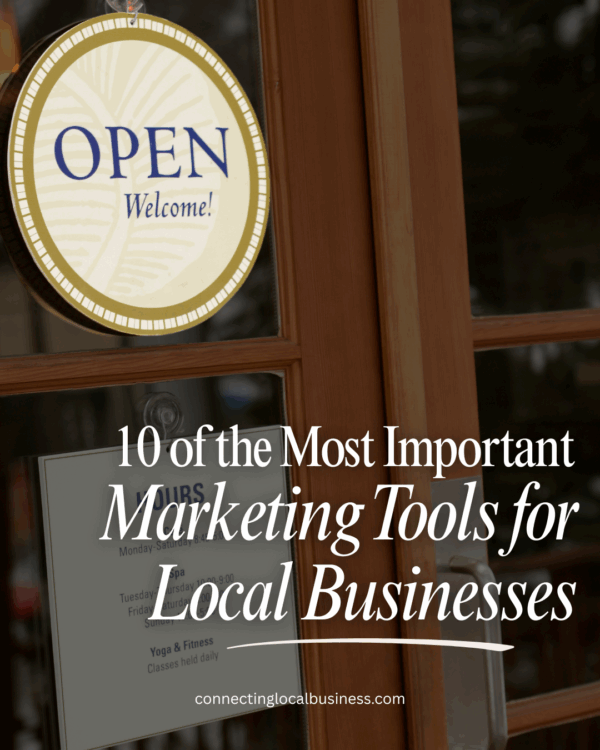
10 of the Most Important Marketing Tools for Local Businesses
- Google Business Profile:
Google My Business (GMP), aka Google Business Profile, remains a crucial tool for local businesses. If you do not have one for your local business, you are missing critical traffic. Grab the tip sheet with the steps to set it up. Check if your business can use GBP
Ensure your GBP listing is complete and up to date with accurate information about your business, including address, phone number, website, categories, and hours of operation.
Regularly post updates, respond to customer reviews, and leverage features like Google Posts and Q&A to engage with your audience.
- Local Search Engine Optimization (SEO):
Focus on optimizing your website and online content for local search. Use location-specific keywords in your website copy, meta tags, and headings.
Ensure your website is mobile-friendly, loads quickly, and has accurate contact information.
Also, consider local backlinks from other community websites and get listed in relevant local directories.
- Email Marketing:
Build an email list of your local customers and use email marketing to stay connected with them. Send regular newsletters, exclusive offers, and updates about your business.
Personalize your emails based on customer preferences and purchase history to increase engagement.
- Social Media Marketing:
Leverage social media platforms to connect with your local audience. Identify the platforms where your target audience is most active and create engaging content tailored to those platforms.
Engage with your followers, respond to comments and messages promptly, and use location-based targeting for your ads to reach local customers.
- Online Directories and Review Sites:
Get listed on popular online directories and review sites specific to your industry and location. Examples include Yelp, TripAdvisor, Yellow Pages, and industry-specific directories.
Encourage satisfied customers to leave positive reviews, as they can significantly impact your online reputation and attract new customers. However, do not ask them to leave one in exchange for anything. Make QR Codes or links accessible to them after the service or purchase is complete.
- Local Influencer Partnerships:
Collaborate with local influencers or micro-influencers who have a dedicated local following. Their recommendations and endorsements can help generate buzz and attract local customers.
Work with influencers to create content, host events, or offer exclusive discounts.
- Geofencing and Location-Based Advertising:
Utilize geofencing technology to target potential customers in specific geographic areas.
Geofencing enables you to send targeted ads or notifications to users who enter a defined location, such as your store’s vicinity or a local event. This can help drive foot traffic and boost local awareness. Here is a guide that explains it.
- Online Video Marketing:
Embrace video marketing to capture attention and showcase your business.
Create engaging and informative videos that highlight your products, services, or customer testimonials. Share these videos on platforms like YouTube, Instagram, and Facebook to reach a larger local audience.
- Mobile Marketing:
With the increasing use of smartphones, optimize your marketing efforts for mobile users. Ensure your website is mobile-friendly, implement SMS marketing campaigns, and consider location-based mobile advertising to target potential customers in real-time.
- Local Partnerships and Community Involvement:
Forge partnerships with other local businesses or organizations to co-host events, sponsor local initiatives, or collaborate on marketing campaigns. Participate in community activities to establish a positive brand image and cultivate customer loyalty.
Track and Analyze
Remember, the marketing tools and strategies that work best for your local business may vary depending on your industry, target audience, and location.
Continuously monitor and analyze your marketing efforts to identify what resonates with your local customers and adjust your strategies accordingly.
If you haven’t completed an online audit of your business yet, grab the worksheet from my last article and start there!
Find more help with planning strategies, workbooks, and more.